

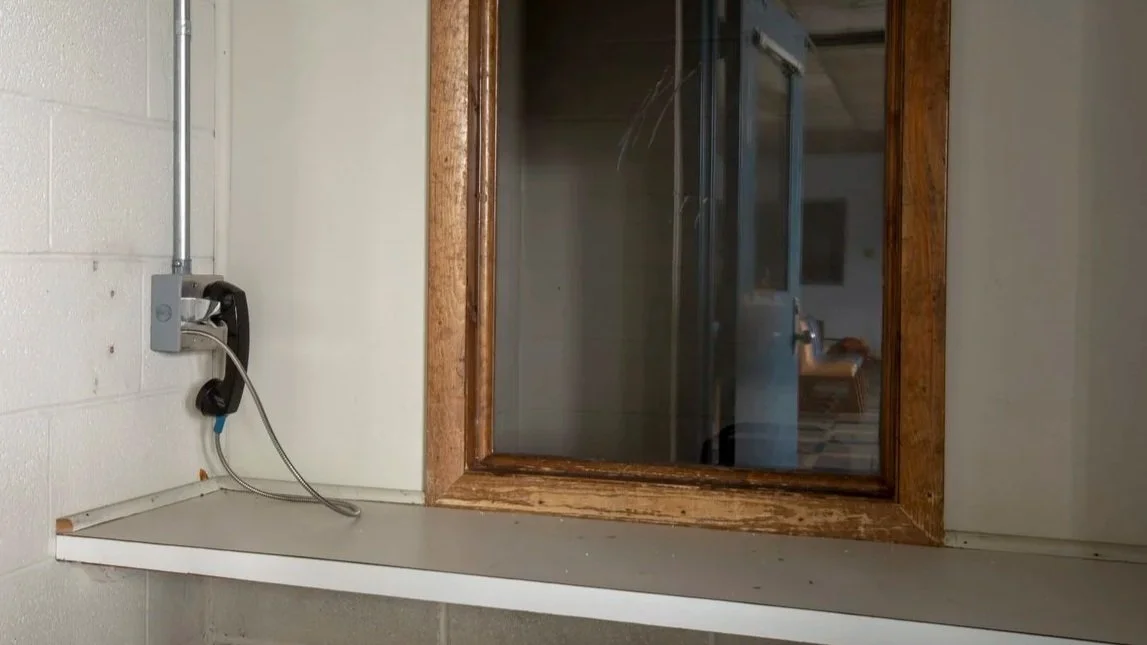
The Breath of a Boy
By Mark Mrozinski
He passed through the visitor entrance, as he’d been doing for the last three months, and took a breath to brace himself. The screening to enter the special confinement unit at Terre Haute was invasive and thorough.
ID check.
He handed it to the guard.
“Nedim Begović, date of birth, June 16, 1954,” he said in his perfect but accented English.
“So you’re a naturalized citizen, eh?” The guard’s eyes narrowed.
“Yes, sir.” Begović had been through all this before, yet he was always surprised by the cold inside the prison walls.
“Where are you from?”
“Chicago.”
“Before that,” the guard snapped.
Begović hesitated. “Bosnia.”
The guard let out a low whistle. “How long you been a citizen?”
But something sat in Begović’s stomach, something cold and hard. It was that thing he needed to say to the young man, if he could.
“How long?” the guard repeated, more loudly now.
Flustered, Begović held up four fingers.
“You don’t speak English or what?”
“Sorry. Four years.”
Out of habit, he waited for the ID to be handed back, but the man kept it. That’s right. He’d remember next time.
Personal effects.
In the locker room, the stark fluorescent light made the room look surreal, like a hospital he’d known. He emptied his pockets and removed his ID and the medical card that described his artificial knee. Phone, keys, wallet, and the piece of shrapnel they’d removed from his leg thirty years ago. And he removed his wedding ring. All in a Ziplock bag, then into the metal locker.
Body scan.
The sweat began when he held out the medical card. Small beads on his upper lip, then his forehead. A guard took it.
Begović stepped into the scanner and spread his legs, raising his arms over his head. The large scanning arm swept by him, then back.
“Check him,” someone yelled from behind a screen. Begović’s throat tightened.
When he stepped out, the wand was waved over him up and down, homing in on the knee. The guard gave it a bump with the detector. “What ’ya got there? Contraband?”
“It’s on the card.” He’d said it each time, but they still seemed to enjoy this more than they should.
“Pat him down, Stan,” a supervisor said from a doorway.
The well-built guard with a grizzled face and a shaved head had him spread his legs and grip a high railing.
“Begović, again,” he said.
“Officer Stancik. Thank you for your service to the prisoners.” Begović always considered his words. Each visit, he’d searched for the right response, something that would fall on the guards like manna.
“These scum deserve nothing. Take your mercy someplace else,” Stancik said as he patted down Begović’s trouser legs. When he straightened up, he caught Begović in the stomach with an elbow. “Oh, sorry ‘bout that.”
Begović nodded and smiled through the choking pain. “Officer.”
An older guard, older than Begović, ran a piece of gauze along his shirt cuffs and fed it into a machine.
Waiting for results. No words from the guard, just a sardonic smile, and Begović moved on.
Another door buzzed, and he entered the holding room lined with orange plastic chairs. Once all the visitors arrived, they’d pass through the next door to the visitation booths. Sweat now soaked his shirt, front and back. He swore under his breath. Things like this were important—to show respect.
After the latest commutation, only a dozen or so remained. Some were convicted terrorists. But only three were receiving visitors today. He knew one. Sanchez. Or Sando. He couldn’t keep it straight. His brother killed a judge; that he remembered. Begović nodded to the young man. They’d spoken once, but he’d chosen not to invest in those who had someone.
And there was a woman, mid-fifties. Probably a mother. Begović hadn’t seen her before. Since Terre Haute held the federal death row, inmates came from all over the United States. And so, they had few visitors.
When he filled out the application for the prisoner visitation program, he wasn’t sure what to expect, what or whom he’d encounter. He just knew if he didn’t find a place for his bitterness and hate, he would destroy something.
They waited fifteen minutes, a grace period for late visitors. Someone on the list hadn’t shown.
The inside door buzzed, and a guard, unknown to Begović, stepped into the room. “Visitation will begin now. Walk slowly to your inmate’s window and proceed with your conversation. Keep your voices down. It’s an echo chamber in there. You know the rules. If anything goes off the rails, we terminate the visit immediately, and you will lose your visitation privileges. You’ll have fifty-eight minutes from now.”
On reflex, Begović checked his watch, marking the time.
They’d spaced them out. Good. Easier for conversation. With his hearing aids, even half a dozen visitors could render his conversation insensible.
He walked behind Sanchez and the woman into the corridor. He recognized Sanchez’s brother, then the woman’s inmate, and two booths later, Jacob. Twenty-three years old.
The chair was cold today, and the handset reeked of disinfectant. Somehow, a medicinal taste came to his mouth.
When Begović reached for the receiver, a tremor began in his hand. His third visit, and it still shook. Still, he put it to his ear.
“Good to see you, Jacob. You look well.”
Jacob showed no reaction; the intercom was off. He sat there handcuffed, with his inked arms crossed, his dark brows knit tight, shadowing his eyes. The maroon scrubs, reserved for visitations, were oversized, and Jacob wasn’t even 120 pounds. Begović tapped on the reinforced glass and pointed to the intercom button on the other side. Jacob looked to the right and then to the left and sighed, then flipped the intercom on.
His leg irons rattled loudly through the intercom as he shifted in his chair. He brought his face a few inches from the glass. “Why do you come, old man? I got all the friends I need.” He sat back in his chair, but his breath left two small, steamed circles on the glass.
“I can leave and not come back. You signed up for this.”
Jacob looked down at the floor and began drumming on his thighs, tapping out a rhythm to a song only he could hear.
Begović sat a while and let Jacob be Jacob. The other two visits had started the same way. He specifically asked for a death row terrorist, but he was sure they wouldn’t comply with his request. They did. And here they were—a terrorist and a survivor.
Jacob tipped the chair backward a bit and put his cuffed hands behind his head.
And now his eyes found Begović. Unflinching.
Begović wouldn’t look away, couldn’t. A guard came to the door behind Jacob and cracked it open a few inches. “You visiting here, or you done?”
“A few more minutes,” Begović said, and the guard nodded and walked away.
Jacob still hadn’t broken eye contact. “Do you want to forgive me or something like that? Put it in a letter.”
Begović sighed.
Then checked his watch. “I don’t. I’m just here.”
Jacob came close to the glass again. “I’m not sorry. Do you understand?”
“Did you receive the money I put in your account?”
“Now you’re trying to buy me.” He sat back now.
“You got it. Good. Remember, you said it was okay.”
“Got me some jerky and some ibuprofen. Hurts me at night.” Jacob held up his twisted hand, injured in the arrest. Symbols of hate covered his forearm.
“Mine too, I mean my knee. I take two in the morning, two at night.”
“What’s up with that? I saw you limping.”
“An old wound. Healed now. Mostly.”
“You gotta be tough, right? Don’t let ’em see you sweat.”
Now conscious of his soaked shirt, Begović smiled, but touched his knee. “Yes.”
“Whoever did it, I mean, I’d take ’em down for that. A man’s got to be respected.”
“It is fine. I don’t need respect.”
“Don’t go soft on me, old man!” Jacob’s face colored a bit, and he leaned forward.
“I won’t.”
They sat in silence for another few moments. Begović checked his watch. Forty-three minutes left.
The presence in his stomach almost throbbed now to be recognized. Twice before, he’d lost his courage, and on the drive home, swore at himself, even hated himself. Today, he’d say it.
“Uh, I want to tell you, I understand …” His voice was trembling. “… why you did it.”
Jacob’s eyes narrowed, and he shifted in his chair. “What do you mean ‘you understand’?”
“How you could hate someone like that.”
Jacob leaned toward the glass. He was listening now.
Begović took a breath. “I hated too.”
“Who?”
Begović lifted his knee, but hesitated, glancing up at Jacob, then slowly rolled up his trouser leg, revealing his scars. “I have other wounds. How you say … unutra … inside.”
In Jacob’s eyes, for the first time, something was working, and after a moment, he said, “You should retaliate. Eye for an eye.”
“They didn’t hate me. They hated the idea of me.”
“Who could hate you? You’re just an old man.”
Begović nodded. “Somebody did.”
“Well, I’m not sorry.” Jacob covered the microphone and swore, then turned around, looking for the guard.
“There were children you killed, not just men.”
“Yeah. So?”
This was the moment Begović stood despite the guard’s warning, but he fought the urge to swear, to strike the glass, to cry. Instead, he took a deep breath and reached into his pocket for the shard, then remembered it was in the locker. After another breath, he sat down.
Both hands were shaking now, so Begović gripped the small ledge with them. “They were just an idea, I guess—the children?”
Jacob turned again and shouted for the guard. He clicked off the mic, and they had a conversation, and then the guard left.
He slapped again at the switch on the counter, and the mic clicked back on. “He says I don’t have to talk to you.”
“No, you don’t.”
Jacob folded his arms and stared at the floor.
“You ever love somebody? A girl?” Jacob asked.
“Of course. But I’m alone now.” Begović touched his finger where the ring should be; he could still remember her eyes, sad but clear.
Jacob opened his mouth to speak, but then shook his head.
“Where is she now?” Begović asked. “Your girl.”
Jacob shrugged. And he covered his face.
“Have you talked to her since …?”
Jacob shook his head.
“I can contact her. If you want.”
Jacob dropped his hands onto his lap. His face was puffy now. “Why would you do that?”
“I don’t know. I guess I should.”
“Why?” Jacob grimaced. “She won’t talk to you.”
“I could try.” Begović allowed a small smile.
“You’re crazy, old man.” Jacob looked at the floor, his energy seeming to have spun out. “How much time?”
“Ten minutes.” Now Begović would sit and wait.
After what felt like an eternity, Jacob said, “We were gonna be together …”
“Hmm. She loved you.”
Jacob didn’t move, just stared at the floor.
“But?”
“She couldn’t love me now.” Jacob’s face was washed of emotion.
Begović paused, then said, “So you worry she cannot love when it is hard for her.”
Jacob continued to stare at the concrete between his feet.
“Five minutes,” the guard called, his voice much louder than needed for the small space.
“Can I contact her for you? I’m good at finding people.”
Jacob gave nothing.
“Her name. I need her name,” Begović said.
Jacob glanced again, then brought his face to the glass. “Sammi. Sammi Griffith.”
“Where should I look?”
Jacob shrugged, then looked down and said, “Richmond.”
“Sammi Griffith. Richmond,” Begović repeated. He had no pen or paper.
Jacob nodded, his face now drained of color, the saddest face Begović had ever seen. He was but a boy.
“My name is Nedim.”
Jacob put his palms on the glass, and their eyes met one last time. The sadness there was so deep it scared Nedim.
Nedim came close to the glass as well and moved his lips, but no sound came out. I can never forgive you.
✧ ✧ ✧
After retrieving his personal effects, he walked out of the prison with surprising efficiency. A few doors, a few gates, and he was out in the parking lot. Too quick for the mind to transition.
The sky was clouded, and a brisk wind picked up, causing him to pull his coat tighter about him. A sour smell came from the Wabash River just beyond the field to the west. He should have sensed some relief upon leaving, but the weight was still with him, yet it was different this time—chosen now.
He reached into his pocket for the shrapnel, about the size of a lima bean. It was some kind of metal, but he couldn’t tell what, its sharp edges rubbed smooth from thirty years in his pocket. Something moved in him as he held the shard, and he hurled it as far as he could, across the parking lot, into the field. Wherever it landed, it made no sound. Sad. It should.
He walked to his Corolla and opened the door with the key; the remote hadn’t worked since he bought it. Once in the car, he held his hands before his face and studied them, front and back. They were no longer trembling.
“Sammi Griffith. Richmond,” he repeated to the stale air inside his car.
✧ ✧ ✧
As an Advance Reader for this story, you have the opportunity to tell me what you think. Please take a moment and complete the short feedback form. Your anonymous input will help me shape the next draft of this story!
This story is a work of fiction. Except where explicitly identified in the afterword, the names, characters, and incidents herein are a product of the author’s creation and any resemblance to actual persons or events is entirely coincidental.
THE BREATH OF A BOY. Text copyright © 2026 by Mark Mrozinski LLC. All rights reserved.
No part of this work may be reproduced, stored in retrieval systems, or transmitted in any form or by any means, electronic, mechanical, photocopying, recording, or otherwise, without the express written permission of the author.